You're Not Just Recording Your Life — You're Writing the Next Version of Yourself

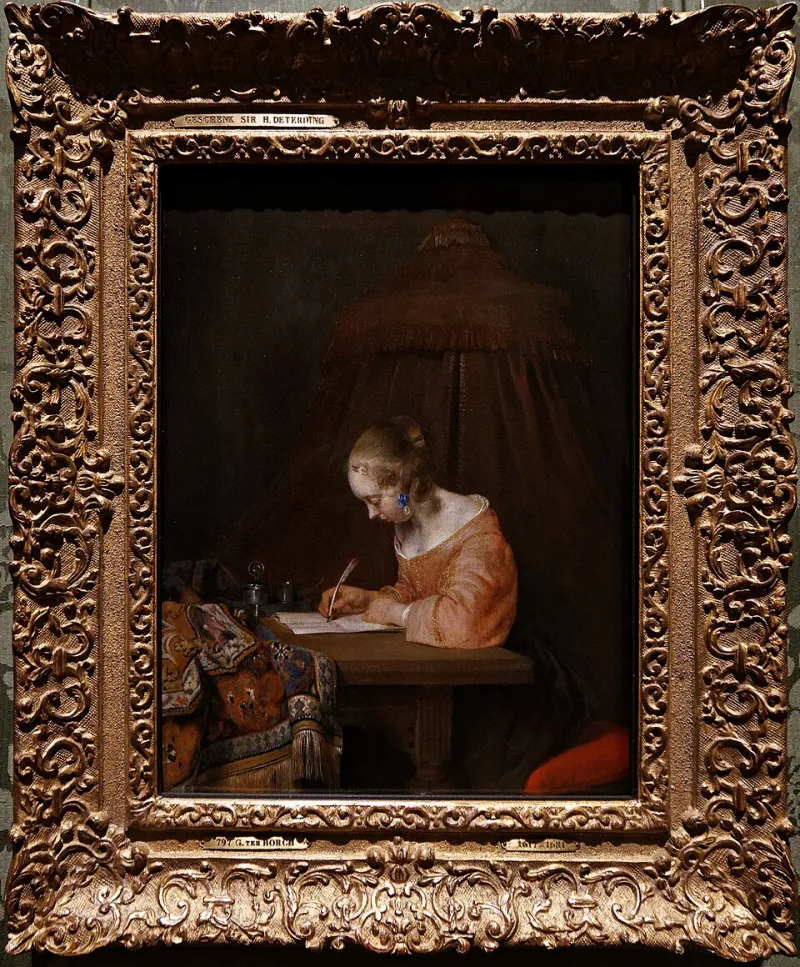
Photo: Kristin Hardwick, CC0, via Wikimedia Commons
There's a version of journaling most people know: the recap. You write down what happened today, how it made you feel, maybe what you're worried about. It's useful. It's cathartic. It's basically a pressure valve for the accumulated weight of being a person.
But there's another way to think about what's happening when you put words on a page — one that's a little more unsettling, and a lot more interesting. The idea that you're not just documenting yourself. You're constructing yourself. That the act of writing isn't a mirror held up to who you already are. It's a blueprint for who you're in the process of becoming.
The Story You Tell Is the Story You Live
Narrative psychology — a field that examines how humans use storytelling to make sense of their lives — has been building a compelling case for this for decades. Researchers like Dan McAdams at Northwestern have spent careers studying how the stories we tell about ourselves become the architecture of our identity. Not metaphorically. Literally.
When you write about yourself, you're not just observing. You're selecting. You're deciding which details matter, which patterns are meaningful, which version of events is the true one. And those decisions — made quietly, in a notebook, with no one watching — shape how you understand yourself and therefore how you act.
Write about yourself as someone who always gives up when things get hard, and you'll start reaching for evidence that confirms it. Write about yourself as someone who has struggled and kept going anyway, and the same history looks completely different. Same facts. Different story. Different person.
The Gap Between Who You Are and Who You're Writing
Here's where it gets genuinely interesting. Most people, when they journal, write about their current self — their feelings, their circumstances, their frustrations. That's valuable. But some people, sometimes without even meaning to, start writing toward a self that doesn't quite exist yet.
They write about the life they want with enough specificity that it starts to feel real. They describe the values they're trying to hold even on days when they fall short. They write letters to versions of themselves that are braver, clearer, more settled. And something strange happens: they start becoming those people.
This isn't magical thinking. It's closer to what psychologists call "possible selves" — the mental representations we hold of who we could become. Research suggests that the more vividly and specifically we imagine and articulate these future selves, the more motivating they become. The journal is one of the most powerful tools we have for making a possible self feel concrete.
Real People, Real Rewrites
Talk to people who've kept journals through significant life transitions — a career change, a divorce, a move across the country, recovery from something hard — and you'll hear a version of the same story over and over. The journal didn't just record the transition. It drove it.
One woman who spent years journaling through her shift from corporate law to running a small ceramics studio in Vermont described it this way: "I didn't decide to leave my job and then write about it. I wrote about it until leaving became inevitable. The journal made it real before I had the courage to make it real in my actual life."
That's not an unusual experience. It's just an unusually clear articulation of something a lot of journal-keepers feel but don't always have words for. The page becomes a rehearsal space. You practice being someone slightly different in writing, and eventually that practice bleeds into how you show up.
Writing Aspirations Without Cringing
There's a real barrier here worth naming. A lot of people feel embarrassed writing about who they want to become. It feels presumptuous, or naive, or like you're setting yourself up to feel worse if it doesn't happen. The journal is private, but the inner critic still shows up and makes you feel silly for writing "I want to be someone who creates things that matter" or "I'm becoming a person who handles conflict without shutting down."
Push through that. The cringe is the self-consciousness of someone who hasn't yet given themselves permission to want things clearly. Writing your aspirations down isn't arrogance — it's the beginning of accountability. You can't move toward something you won't even name.
A few approaches that help:
Write in the present tense. Instead of "I want to be more patient," try "I am someone who pauses before reacting." This isn't delusional — it's directional. You're writing toward the habit, not lying about where you currently are.
Describe the values, not just the goals. Goals are outcomes. Values are how you want to move through the world regardless of outcomes. Journaling about your values — what you actually care about, what kind of person you want to be in your relationships, your work, your creative life — gives you something more durable to write toward than a checklist.
Write about past versions of yourself with generosity. How you narrate your history matters. If your journal is full of evidence that you're someone who messes things up, you're building a case against yourself. Try rewriting old stories with a more compassionate lens — not to erase what happened, but to understand it differently. That reframing is itself a form of identity work.
The Journal as a Living Document of Becoming
There's a reason people who journal for years often describe going back through old entries as a strange, sometimes moving experience. You can watch yourself change. You can see the concerns that consumed you and then dissolved. You can trace the slow emergence of a perspective you now take for granted but had to grow into.
That's not just documentation. That's evidence of authorship. Of a self that was never fixed — that was always being written.
The invitation in all of this is simple, even if it doesn't feel simple: stop thinking of your journal as a place to record who you are, and start thinking of it as a place to decide who you're becoming. The two aren't mutually exclusive. But the second one is a lot more interesting.
Open the notebook. Write toward the person you're already in the process of becoming. They're closer than you think — and they've been waiting for you to put them into words.