When Words Won't Come: Non-Linear Ways to Journal Through Emotional Fog
Photo: Walter Tau, CC BY-SA 4.0, via Wikimedia Commons
The Blank Page Problem (When It's Not About Writer's Block)
There's a specific kind of stuck that doesn't get talked about enough. It's not the dramatic kind — not grief or rage or heartbreak that you can at least name and work with. It's the foggy kind. The flat kind. The kind where someone asks how you're doing and you genuinely don't know, and "fine" is less of a lie and more of a placeholder.
Traditional journaling assumes a certain baseline: that you have something to say, some feeling to trace, some narrative thread to follow. But what do you do when there's just... nothing? Or worse, a murky, undefined something that refuses to take shape?
The answer might be to stop trying to use words entirely.
Why Emotional Numbness Is Actually Information
First, let's validate the fog for a second. Numbness isn't emptiness — it's often your nervous system's way of managing overwhelm. Psychologists sometimes describe it as a kind of internal circuit breaker: when there's too much to process, the system dims the lights to prevent a full overload. So if you're sitting down to journal and coming up blank, that blankness itself is telling you something.
The problem with conventional journaling in this state is that it demands translation — it asks you to convert a pre-verbal, sensory, body-level experience into linear language. That's a big ask when the experience hasn't even fully formed yet. Non-linear journaling methods skip that translation step entirely. You're not trying to describe the feeling. You're just trying to make contact with it.
Color Mapping: Your Emotional Palette
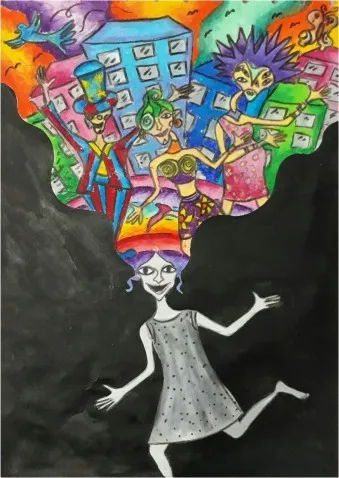
Grab whatever you have — colored pencils, markers, watercolors, even just a basic Crayola set from the drugstore. Don't draw anything. Don't try to make it look like something. Just start filling a page with colors based on the loosest possible question: What does today feel like, in color?
Maybe you reach for gray without knowing why. Maybe you layer a muted green under a washed-out yellow. Maybe you press hard with a dark color in one corner and barely touch the page with another. Don't analyze while you're doing it — just let your hand make choices.
After, you can sit with it and write a single sentence if something comes. Or don't. The color map itself is the journal entry. Over days and weeks, you'll start to notice patterns — not in a clinical way, but in a personal language that belongs entirely to you.
This practice has roots in art therapy but you don't need a therapist to use it. You just need permission to make something that doesn't have to mean anything yet.
Movement Journaling: Let Your Body Write the Entry
Your body often knows things your conscious mind hasn't caught up to yet. Movement journaling is exactly what it sounds like: instead of sitting still and writing, you move — and then you write from that place.
Here's a simple version: Put on a song that feels vaguely right for your mood (not necessarily a happy one — just one that resonates). Move however you want to move. Stretch, pace, sway, lie on the floor. No choreography, no performance. Just let your body respond to the sound for the length of the song.
Then, immediately after — before the thinking brain catches up — open your journal and write for two minutes without stopping. Don't edit. Don't aim for coherence. You're not writing about the movement; you're writing from the state the movement opened up.
A lot of people find this surprisingly effective at cracking through numbness, because movement bypasses the overthinking that tends to block emotional access. Your body is less guarded than your narrative self.
Found-Object Documentation: Journaling the Outside World as a Mirror
This one sounds odd until you try it. Spend a day — or even just an hour — collecting small things that catch your attention for no obvious reason. A receipt with an interesting texture. A leaf that's mostly brown but has one green edge. A photo from a magazine, a piece of packaging, a scrap of something. Don't overthink the selection; if it catches your eye, it counts.
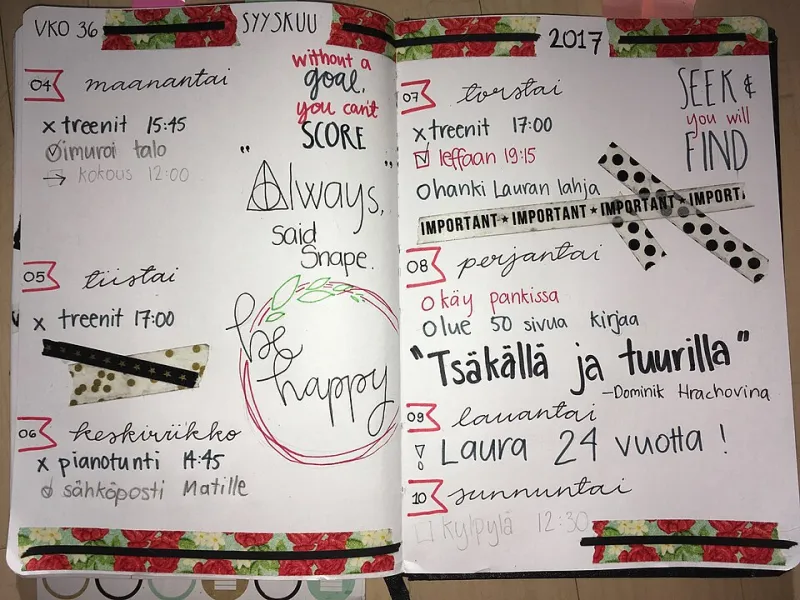
Tape or glue them into your journal. Underneath each one, write just a few words — not an explanation, just an association. "This feels like Tuesday." "Something about this is familiar." "I don't know why I kept this."
What you're doing is outsourcing your inner world onto the physical world and then looking at what you chose. The objects you're drawn to when you're emotionally foggy often reflect something you're not yet able to say directly. It's a sideways approach to self-knowledge, and sometimes sideways is the only way in.
The One-Word Entry: Smaller Than You Think
If you're resistant to all of the above — if even pulling out art supplies feels like too much — there's a version of this that takes thirty seconds. Open your journal. Write one word. Close it.
The word doesn't have to be a feeling. It can be an object, a color, a sound, a texture. Whatever floats up first. "Concrete." "Hum." "Orange." "Static."
Do this every day for two weeks. At the end, read the list back. You'll be surprised how much of a story is there.
Giving Yourself Permission to Not Know
One of the most radical things you can do in a journaling practice is release the expectation that you'll leave the page with more clarity than you came with. Sometimes the point is just to show up and make contact — not to arrive at an insight, not to process something completely, not to feel better.
Emotional fog is part of the human experience, and it deserves space in your creative practice the same way clarity does. You don't have to earn the right to journal by having something interesting to say. The blank, the numb, the undefined — those are real too.
Your inner world doesn't always speak in sentences. Sometimes it speaks in color, in movement, in the random receipt you couldn't bring yourself to throw away. Learning to listen in those registers isn't a consolation prize for when words fail. It's a whole other language — and it's been available to you the whole time.