Half-Written and Whole: What the Journals You Abandoned Are Really Telling You
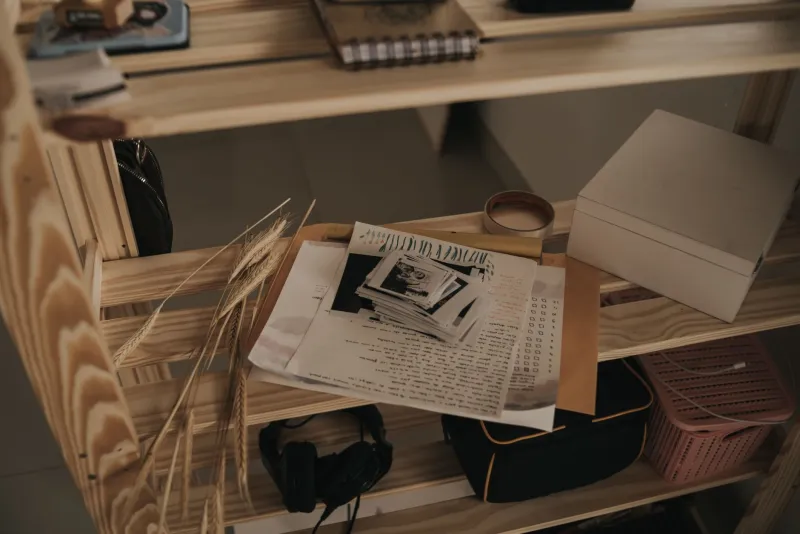
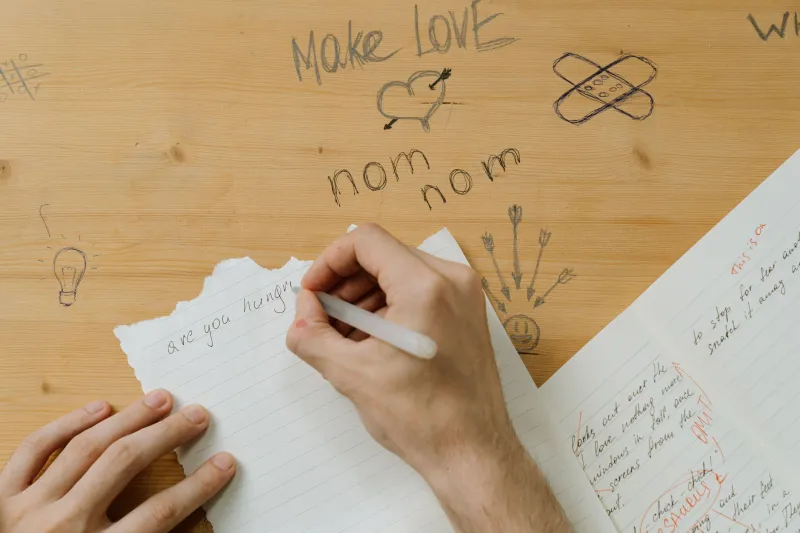
Most of us have at least one. Maybe it's a beautiful leather-bound notebook you bought at a boutique in Brooklyn or a quirky spiral-bound you grabbed at Target because the cover made you smile. You started strong — a few earnest entries, some ambitious intentions scrawled across the first page — and then somewhere around week three, the writing just... stopped.
For a long time, that unfinished journal sits there like a small, quiet accusation. You didn't follow through. Again.
But what if we've been reading that silence all wrong?
The Mythology of the Finished Journal
There's this unspoken cultural pressure around journaling that says a "real" journaling practice means filling every page, front to back, with consistent, thoughtful entries. We romanticize the image of the dedicated writer who never misses a morning, whose shelves are lined with completed volumes dated and organized like a personal archive.
The reality? Most people's journaling lives look nothing like that. And that's not a problem to solve — it's actually a pretty accurate map of how human beings grow.
We are not the same person on page 47 that we were on page one. Sometimes the journal we started doesn't fit the person we've become by mid-March. Sometimes the format we chose — prompted, free-write, gratitude-only — stops serving us before we've even noticed the shift. When you put that notebook down and don't pick it back up, something real happened. You changed.
What a False Start Is Actually Saying
Psychologists who study creative behavior often point to what's called identity foreclosure — the way we sometimes lock ourselves into a version of who we think we should be, even when that version no longer fits. A journal you abandoned might be the physical record of a moment when your actual self refused to perform for the version of yourself you thought you were supposed to be.
Maybe you started a gratitude journal during a particularly difficult stretch because every wellness podcast told you that was the move. But somewhere around entry twelve, writing "I'm grateful for my morning coffee" started to feel hollow. So you stopped. That's not laziness. That's discernment. Your instincts recognized inauthenticity before your conscious mind did.
Or maybe you began a journal with the explicit goal of processing a specific situation — a career change, a difficult relationship, a creative project. Once that chapter closed, the journal lost its reason for being. Walking away wasn't giving up. It was completion, just not the kind that fills every page.
Perfectionism in Notebook Form
There's another layer worth naming honestly: sometimes we abandon journals because we've already "ruined" them. You missed a few days, or you wrote something you immediately regretted, or your handwriting looked messy on a page that used to look clean. And suddenly the whole notebook feels contaminated.
This is perfectionism doing what perfectionism does — convincing you that anything less than flawless is worthless. It's the same impulse that makes people buy a new planner in February instead of continuing with the slightly-off-track one from January.
The abandoned journal, in this case, is less about the journal and more about your relationship with your own imperfection. Sitting with that is uncomfortable. But it's also one of the most useful things you can do.
Picking One Up Again — Without Pressure
Here's an experiment worth trying: pull out one of your unfinished journals and flip through it without judgment. Don't read it as a record of failure. Read it as a portrait of a specific season.
Notice what you were paying attention to. Notice what you were worried about, what you were excited about, what you kept circling back to without resolution. There's a version of you in those pages who was doing their best with what they had at the time. That version deserves a little more credit than the dusty shelf has been giving them.
You don't have to finish it. You don't have to continue it. You don't even have to keep it. But looking at it with fresh eyes — maybe months or years later — has a way of revealing things you couldn't see when you were in the middle of living those entries.
Incompleteness as Creative Intelligence
In art, there's a long tradition of honoring the unfinished work. Michelangelo's Prisoners — those figures half-emerging from marble — are considered some of his most powerful pieces precisely because of what's still trapped inside the stone. Schubert's "Unfinished Symphony" is one of the most beloved pieces in the classical canon. The fragment can hold just as much meaning as the whole.
Your half-written journals are your own version of that. They're not evidence of a broken practice. They're evidence of a living one — one that breathes and shifts and sometimes goes quiet because you needed it to.
The most honest creative practice isn't the one that never wavers. It's the one that's willing to stop when stopping is the truest thing it can do.
Reframing the Shelf
Next time you look at that collection of unfinished notebooks, try seeing it differently. Each one marks a moment when something in your life was in motion. Each abandoned entry is a timestamp. Each blank back half is not an empty space — it's open territory that belonged to a version of you who hadn't arrived yet.
You don't owe your journals completion. You owe them honesty. And sometimes the most honest thing you can do is put the pen down, close the cover, and let that chapter be exactly as long as it needed to be.
The journals you finish tell one kind of story. But the ones you left behind? Those are the ones brave enough to stay incomplete.