The One Entry You'll Never Post — And Why That's the Whole Point

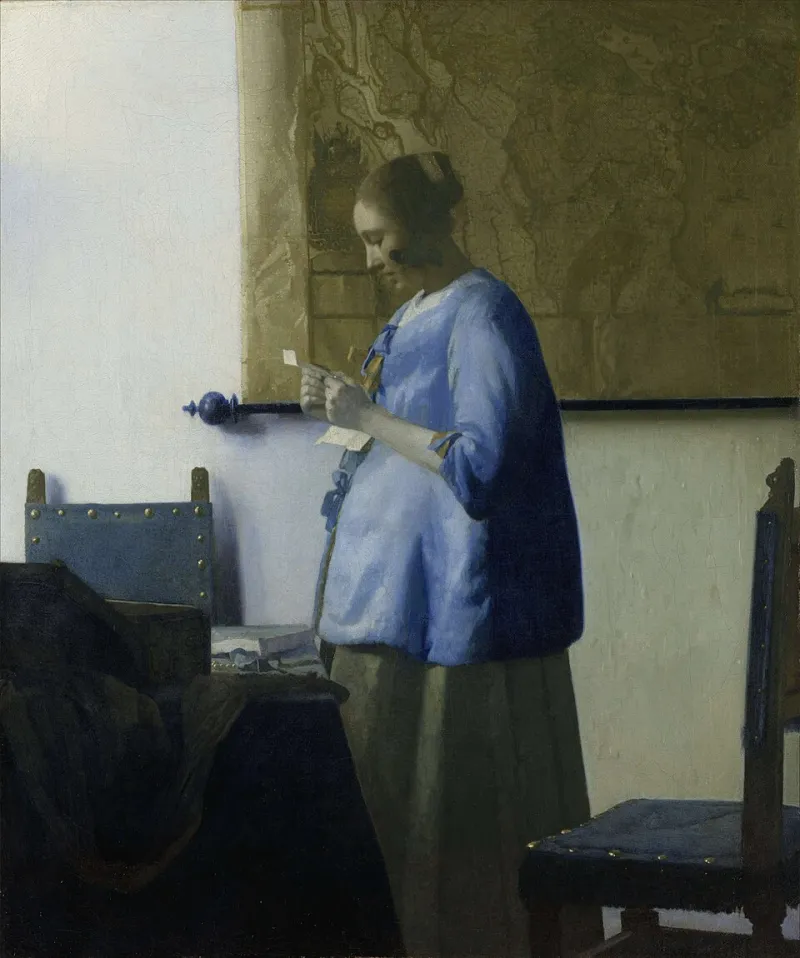
Photo: Frans van Mieris the Elder, Public domain, via Wikimedia Commons
Somewhere between your first Instagram post and your most recent story, something subtle happened to the way most of us relate to our own experiences. We started processing them with an invisible audience in mind. Not maliciously, not even consciously — it just became the water we swim in. You have a hard conversation, and some part of your brain is already framing it. You get a piece of good news, and before you've even finished feeling it, you're thinking about how you'd describe it.
Journaling was supposed to be the antidote to that. The private space where you didn't have to perform. But even journaling has gotten complicated in the age of shareable aesthetics and journaling TikTok and the gentle cultural pressure to turn your inner life into content.
So here's a quiet, maybe radical suggestion: write something you will never share. Not as a rule, not forever, but intentionally — as a practice. And notice what happens.
When the Audience Disappears
Most of us don't realize how much of our inner monologue is actually addressed to someone. We rehearse explanations. We write apologies that are really arguments. We describe our feelings in ways that are designed to be understood by another person, rather than simply felt by ourselves.
That's not inherently bad — we're social creatures, and even private writing is shaped by the language and frameworks we've absorbed from others. But there's a meaningful difference between writing that's genuinely private and writing that's private-for-now.
When you write with even the faint possibility of an audience, you edit. Not dramatically, maybe, but the filter is there. You choose words that are legible to others. You frame your confusion in ways that make narrative sense. You soften the edges of thoughts that might look bad out of context.
Remove that possibility entirely — write something that is categorically, unconditionally not for anyone else — and the filter drops. What comes out is often stranger, messier, and more honest than anything you'd write with a reader in mind.
The Cultural Pressure to Perform Vulnerability
Vulnerability has had a branding moment in American culture. Somewhere along the way, being open about your struggles became not just acceptable but aspirational — a sign of authenticity, relatability, courage. And in many ways, that's genuinely good. The stigma around mental health has softened. People feel less alone.
But there's a shadow side to performed vulnerability. When openness becomes a social currency, it creates its own kind of pressure. The pressure to have a redemption arc ready when you share something hard. To frame your pain in a way that's inspiring rather than just painful. To know, before you've even finished processing something, what the takeaway is.
Your private journal doesn't need a takeaway. It doesn't need to be inspiring. It doesn't need to help anyone or resonate with anyone or demonstrate your capacity for growth. It just needs to be true.
That's a freedom that's genuinely rare right now, and it's worth protecting.
What You Actually Lose When Everything Is Shareable
There's a concept in psychology called the audience effect — the well-documented phenomenon where people perform differently when they know they're being observed. It applies to journaling too, even when the observer is hypothetical.
When you write knowing (or even just suspecting) that someone might read it someday, you unconsciously curate. You might leave out the embarrassing details. You might skip the contradictory feelings that don't resolve neatly. You might write the version of yourself that you want to be seen as, rather than the version that actually showed up that day.
Over time, a journal written with a ghost audience becomes a kind of personal brand document. Polished. Coherent. Missing all the stuff that makes you actually human.
The entries that never get shared are the ones where you admit that you were jealous of your best friend, or that you don't actually want the thing you've been telling everyone you want, or that you're scared in a way that doesn't have a clean explanation. Those are the entries that do the real work — not because they're dark, but because they're undefended.
How to Actually Write for Just Yourself
It takes practice, especially if you've been journaling with even a peripheral awareness of an audience. A few things that can help:
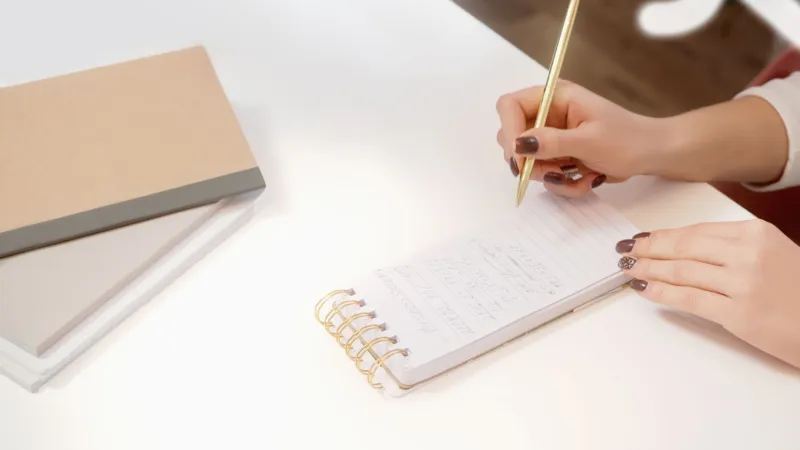
Change the format. If your regular journal feels like it might be read someday, get a separate notebook that's explicitly just for you. Something you'd feel comfortable destroying if you wanted to. The physical object signals something to your brain about the kind of writing that belongs in it.
Write in the middle of the night, or first thing in the morning. The liminal hours — before your social self has fully booted up — tend to produce less curated writing. The audience effect weakens when you're half-asleep.
Let yourself be incoherent. You don't have to explain your feelings. You don't have to make them make sense. If you're angry and you don't know why, you're allowed to just write I'm angry and I don't know why and keep going from there without resolving it.
Write the things you'd never say out loud. Not to be edgy — just because those are often the things that most need somewhere to go. The petty thought. The fear that seems too small to matter. The hope you haven't told anyone about because it feels too fragile.
The Creative Liberation of the Unseen Page
Here's the surprising thing: writing that's purely for yourself tends to make your public writing better. Not because you mine it for content, but because the practice of genuine honesty — with no performance attached — builds a kind of creative muscle. You get better at knowing what you actually think, as opposed to what you're supposed to think. That clarity bleeds into everything.
The journal entry you'll never share might be the most important writing you do all year. Not because of what's in it, but because of what it proves: that your inner life still belongs to you. That not everything needs to be witnessed to be real. That some things are worth writing precisely because they'll never leave the page.
In a world that wants everything, keeping something entirely to yourself is its own quiet form of power.