What Your Worst Decisions Ever Made Were Actually Teaching You All Along
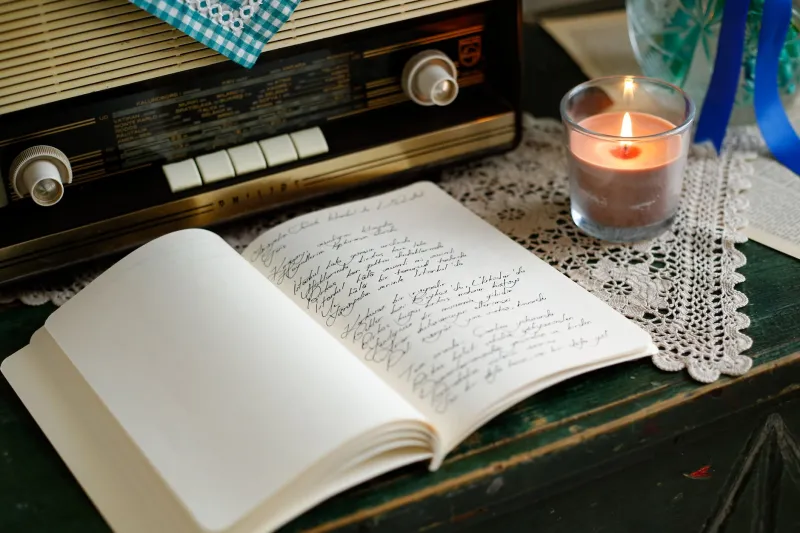
There's a particular kind of dread that comes with cracking open an old journal. Not the nostalgic, golden-hour kind of dread — more like the sweaty-palmed sensation of accidentally replaying a voicemail you left someone at 2 a.m. in 2014. The handwriting looks familiar, but the person behind it feels almost like a stranger.
And yet, that stranger holds something you can't find anywhere else: an unfiltered record of exactly who you were before you knew better.
Here's the thing about mistakes — they don't just happen to us. They shape us, quietly and incrementally, like water carving stone. But most of us never go back to look at the stone. We just keep moving, assuming the shaping happened and we're better for it. Old journal entries are the rare chance to actually see the carving in progress.
The Archive You Forgot You Built
Most journal keepers don't think of themselves as archivists. You weren't writing for posterity. You were venting about a job that was draining your soul, processing a relationship that made zero sense, or furiously documenting a decision you were terrified to make. You were just trying to survive the week.
But that survival-mode writing? It's actually a goldmine.
When you go back to those entries — the messy ones, the desperate ones, the ones where you were clearly making a choice you'd later regret — you're not just reading old news. You're reading the raw data of your own development. Every "I don't know what I'm doing" and every "I think this is the right call" is a data point. String enough of them together and you start to see something remarkable: patterns.
Maybe you always second-guessed yourself right before a breakthrough. Maybe every time you ignored your gut in a relationship, you wrote the warning signs down anyway — and then proceeded to ignore them in real life. Maybe your journal knew things your conscious mind refused to admit.
Why the Cringe Is Actually the Point
Let's talk about the embarrassment factor, because it's real and it's worth naming. Re-reading entries about the person you were obsessed with who was clearly not good for you, or the business idea you were convinced would change your life, or the friendship you defended to the death before it imploded — it stings.
That sting, though? That's not shame. That's contrast.
You can only feel that gap between who you were and who you are now because growth actually happened. The cringe is evidence. It means your values shifted, your judgment sharpened, your self-awareness deepened. If you read an old entry and felt nothing — if past-you and present-you were completely identical — that would be the real problem.
So instead of skimming past the uncomfortable parts, try sitting with them. Not to wallow, and definitely not to punish yourself. But to ask: what was I actually working through here? And more importantly — what did I learn that I'm still using today without even realizing it?
Reading the Patterns, Not Just the Moments
One cringe-worthy entry is a moment. A string of them, revisited with fresh eyes, is a curriculum.
Try this: instead of reading your old journals chronologically, read them thematically. Pull out every entry where you were navigating a major decision. Or every entry where you were in conflict with someone. Or every entry where you felt stuck or lost. Read them together, out of sequence, and watch the through-lines emerge.
You might notice that you've had the same conversation with yourself about your creative work for the past seven years. Or that every time life got chaotic, you stopped writing — and every time you stopped writing, things got worse before they got better. Or that the things you were most afraid of in your twenties turned out to be the exact experiences that defined your thirties in the best possible way.
These aren't coincidences. They're your personal operating system, laid bare.
Prompts to Help You Mine Your Own Archive
If you're ready to dig in, here are a few reflective prompts to guide the excavation:
1. Find the decision you regret most from five or more years ago. Write about it now — not to relitigate it, but to identify what information you had at the time versus what you know now. What were you optimizing for then? What do you optimize for today?
2. Look for a pattern of avoidance. Is there a topic, person, or feeling that keeps showing up in your old entries and then disappearing without resolution? What does that tell you about what you were afraid to face?
3. Spot the moment before the turning point. Often, the entry right before a major life change is the most revealing. What were you telling yourself right before everything shifted? Were you bracing? Hoping? Completely oblivious?
4. Find a version of yourself you've outgrown — and thank them. Write a short letter to that past self. Not a lecture. A thank-you note. What did they carry so you wouldn't have to? What did they figure out the hard way so you could navigate it more gracefully?
5. Ask: what did I know then that I forgot later? Sometimes growth isn't linear. Sometimes past-you had a clarity about something — a boundary, a value, a dream — that current-you has drifted away from. Your archive might be holding a reminder you didn't know you needed.
Your Past Self Wasn't Wrong — They Were Incomplete
There's a tendency, when we look back at old mistakes, to frame past-us as naive or foolish. But that framing misses something important. Past-you was making decisions with the information, emotional capacity, and self-awareness available at the time. They weren't wrong — they were incomplete. Just like you are right now, in ways you won't fully see for another five years.
That's actually a comforting thought, if you let it be. It means the journal you're keeping today is going to teach future-you something profound. It means the choices you're wrestling with right now — the ones that feel impossible or embarrassing or half-formed — are the raw material of your next chapter of growth.
The journal as time capsule isn't just a metaphor. It's a living document of a person in progress. And every time you open it, you're not just reading the past. You're decoding the architecture of who you've become — and getting a clearer blueprint for who you're still becoming.
So go ahead. Open the old notebook. Let yourself cringe a little. Then look closer, because somewhere in those pages, your younger self left you a gift you haven't unwrapped yet.