What Happens When Your Journals Start Owning You Instead of the Other Way Around
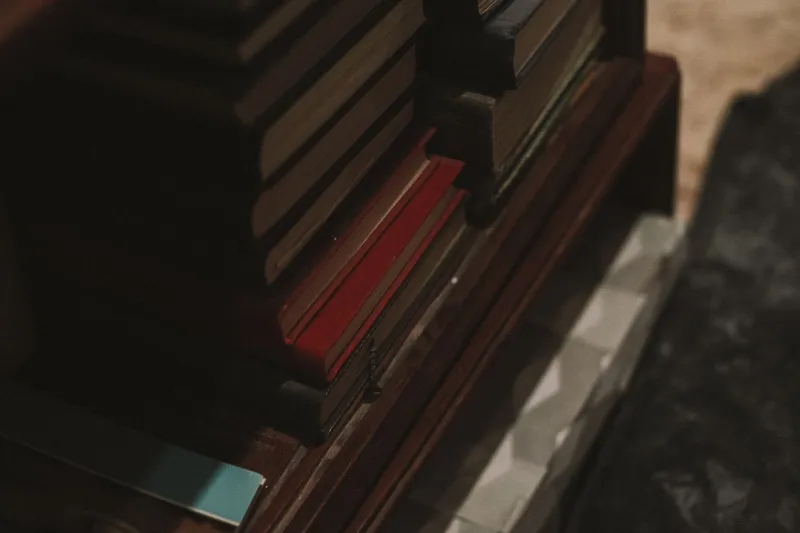
The Shelf That Started Feeling Heavy
There's a ritual a lot of journalers know well. You finish the last page of a notebook, crack the spine of a fresh one, and slide the old one onto a shelf somewhere — maybe a dedicated row, maybe a cardboard box under the bed, maybe a stack in the back of the closet that's slowly becoming its own piece of furniture.
For a while, that collection feels like evidence. Proof that you've been paying attention to your own life. And there's something genuinely beautiful about that.
But somewhere along the way, for a lot of writers, the collection stops feeling like a trophy and starts feeling like a responsibility. You open a blank page and instead of feeling free, you feel watched — by every version of yourself you've ever been, preserved in ink, waiting to be consistent with whatever you write next.
That's the collector's paradox. The very practice meant to liberate your thinking can end up building walls around it.
When Preservation Becomes Pressure
Most of us weren't taught to think critically about what we keep. American culture, especially, tends to treat accumulation as a virtue — more books, more memories, more documentation. The idea of intentionally destroying your own creative work can feel almost transgressive, like burning a piece of yourself.
But here's the thing: keeping every journal entry isn't a neutral act. It's a choice that carries weight, and that weight shows up in subtle ways.
Some writers find themselves self-censoring in real time, aware that what they're writing is going into a permanent archive. Others freeze at the opening page of a new notebook, subconsciously trying to write something worthy of sitting next to their past selves. Some avoid rereading old journals entirely because the experience pulls them backward instead of forward — not in a reflective, useful way, but in a way that feels like getting stuck in amber.
The accumulated record, meant to serve your growth, starts policing it instead.
The Generative Case for Letting Go
There's a long, quietly radical tradition of writers who destroyed their work — not out of shame, but out of something closer to creative hygiene. Franz Kafka famously asked his friend Max Brod to burn everything he left behind (Brod didn't, which is its own complicated story). Emily Dickinson's poems survived almost by accident. Countless artists have talked about the freedom that came from losing work in a fire or a flood — the strange lightness of having to start over from scratch.
This isn't about nihilism or self-erasure. It's about recognizing that creativity is a living process, not an archive project.
When you burn a journal — or shred it, or bury it, or whatever ritual feels right — you're not destroying who you were. You're making a deliberate choice about what gets to take up space in your present creative life. You're telling yourself: I don't need to carry all of this to know that it happened.
That act of release can be profoundly generative. It creates room. It signals to your own nervous system that you're not curating a museum — you're living a life.
The Middle Path: Intentional Forgetting
Not everyone is ready to light a match, and that's completely fine. But there's a meaningful space between keeping everything and burning everything, and it might be worth spending some time there.
Intentional forgetting is a practice, not an accident. It means periodically asking yourself: What in this collection is still serving me? What am I holding onto out of habit, guilt, or fear?
Maybe that looks like doing an annual review of your journals and pulling out only the pages that still feel alive — the ones that make you lean in, the ones that still have something to teach you — and letting the rest go.
Maybe it looks like keeping journals for a set period of time, say two years, and then releasing them without rereading. The writing still happened. The processing still happened. The growth was real. But you're not obligated to store it forever.
Maybe it's simpler than that: maybe you start a new journal with a conscious decision that this one is disposable. Watch what changes in how you write when you know the words aren't going anywhere.
What a Fresh Start Actually Means
There's a difference between starting fresh because you've lost everything and starting fresh because you chose to. The second one is an act of creative confidence.
When you consciously decide to begin without the weight of the archive — without the pressure of being consistent with your past selves, without the nagging awareness of all those documented mistakes and half-formed ideas piled up behind you — something opens up. The blank page stops being a continuation of a very long story and becomes something genuinely new.
This is especially worth considering if you've been journaling for years and feel like your practice has gone stale. Sometimes the staleness isn't about lack of inspiration. Sometimes it's about carrying too much. The practice got crowded.
Starting fresh, whether through an intentional burning ritual, a deliberate decision to stop preserving, or simply giving yourself permission to write something you'll throw away tomorrow, can reintroduce the lightness that probably drew you to journaling in the first place.
Your Archive Doesn't Define You
Here's the thing that often gets lost in conversations about journaling as a creative practice: the value was always in the writing, not the keeping.
The moment you spent working something out on the page — that was real. That changed you. The notebook itself is just the container, and containers don't have to be permanent to have mattered.
You are not your archive. You are the person who keeps showing up to the page, which means the most important journal you'll ever write is always the one you're working on right now.
So if your shelf is starting to feel heavy, maybe that's worth paying attention to. Not as a problem to solve by organizing better, but as a creative signal — a quiet invitation to ask yourself what you're really holding onto, and whether it's time to travel a little lighter.