Rules That Set You Free: The Surprising Creative Power of Working Within Limits

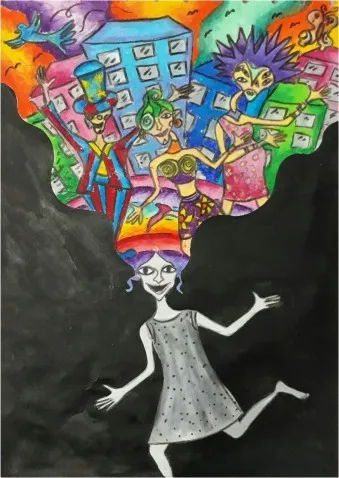
Photo: Shixart1985, CC BY 2.0, via Wikimedia Commons
There's a moment most creative people know well — the one where you sit down with a completely blank page, total freedom, zero restrictions, and then... nothing. The cursor blinks. The pen hovers. The freedom that was supposed to feel exhilarating starts to feel a lot like a trap.
Here's the thing nobody tells you in art class: unlimited freedom is kind of a creativity killer.
Constraints, on the other hand? Those might be your secret weapon.
The Blank Page Problem Is Real
Psychologists have a name for what happens when we have too many options — decision fatigue, or sometimes the paradox of choice. When everything is possible, the brain has a genuinely hard time picking a direction. It's the same reason choosing a restaurant from an eight-page menu is somehow more stressful than choosing from a chalkboard with five items.
The same dynamic plays out in creative work. When a journal page has no rules — no format, no theme, no word count, no structure — the brain often defaults to either paralysis or the same comfortable patterns it always reaches for. We write the same kinds of entries. We draw the same kinds of conclusions. We stay in familiar territory because familiar territory is, well, familiar.
But give that same brain a constraint? Suddenly it has to work differently. It has to find a new path around the obstacle. And that detour? That's often where the interesting stuff lives.
What Constraint Actually Does to Your Brain
Neuroscientists and creativity researchers have been poking at this idea for decades, and the findings are pretty consistent: limitations activate a part of creative thinking that open-ended prompts simply don't reach.
When you tell yourself you can only use six words to describe your morning, or that your journal entry has to take the form of a letter to your past self, or that you're going to write for exactly ten minutes without lifting the pen — you're essentially forcing your brain off autopilot. The rules create friction, and friction generates heat. Creative heat.
Writer and artist Austin Kleon, known for his "blackout poetry" work — where he takes newspaper pages and blacks out words to reveal hidden poems — has talked about how the constraint of working within an existing text freed him from the anxiety of the blank page entirely. The newspaper became a collaborator. The limitation became the point.
That's not an accident. It's a pattern.
The Journal as a Structured Space
If you keep a journal — or you've been meaning to start one — structured formats are worth experimenting with. Not because freewriting doesn't have value (it absolutely does), but because alternating between free and constrained modes can open up very different parts of your inner world.
Some constraints that writers and journalers swear by:
The one-sentence-per-day format. Sounds impossibly simple, right? But try it for a week. Distilling your entire day into a single sentence forces you to decide what actually mattered. Over months, those single lines become a kind of poetic record of your life — spare, honest, and often surprisingly moving.
The three-column method. Divide your page into three vertical columns and assign each one a category: facts, feelings, questions. No crossing over. The constraint of keeping those three things separate often reveals how much we conflate them in everyday thinking.
Timed sprints with a specific lens. Set a timer for eight minutes and write only about what you heard today. Not what you saw, not what you thought — only what you heard. The narrowness of the prompt forces a kind of sensory attention that normal journaling skips right past.
The form-based entry. Write your journal entry as a recipe, a weather report, or a set of stage directions. The absurdity of the format often cracks open honesty in a way that direct narration doesn't. It's harder to be guarded when you're writing your anxiety as a recipe for disaster.
Why Rules Can Feel Like Relief
There's something almost counterintuitive about this, but a lot of people who work with creative constraints describe them as relaxing. That might sound strange — aren't rules supposed to feel restrictive? But think about it this way: a constraint takes a decision off the table. It narrows the field. It says, within this space, you're free.
That's not so different from how a sonnet works. Shakespeare didn't write sonnets despite the fourteen-line iambic pentameter structure — he wrote them through it. The form was the container that held the feeling. Without the container, the feeling might have just... spilled.
Many journalers describe a similar experience when they commit to a specific format for a stretch of time. The structure becomes something to lean against. It holds the weight of the decision-making so the creative part of the brain can actually play.
Trying It for Yourself
If you want to experiment with constraints in your own creative practice, the key is to pick something that feels slightly uncomfortable but not impossible. Too easy and it won't generate friction. Too hard and it just becomes frustrating.
Start small. Pick one constraint for one week. Notice what shows up that wouldn't have shown up otherwise. Notice where you bump against the edges of the rule — because that bumping? That's information. That's where your creative instincts are trying to tell you something.
Themed writing challenges — like NaNoWriMo in November, or the various 30-day journaling prompts that circulate on creative communities every January — work on this same principle. The theme or the deadline is the constraint. The community is the accountability. And the work that comes out of those structured months often surprises the people who made it.
The Arranged Page
There's something kind of beautiful about the idea that you can arrange your creative space — not to control what comes out, but to create the conditions where something real can emerge. A page with a structure isn't a cage. It's more like a trellis. The plant grows around it, through it, and sometimes in directions the trellis never anticipated.
So the next time you sit down to journal and the blank page feels like a wall, try building a smaller room inside it. Give yourself a rule. Set a timer. Pick a form that doesn't quite fit what you want to say — and then try to say it anyway.
You might be surprised what shows up when you stop trying to have infinite options and start working with what's right in front of you.