3 A.M. and a Blank Page: The Quiet Power of Writing After the World Goes to Sleep
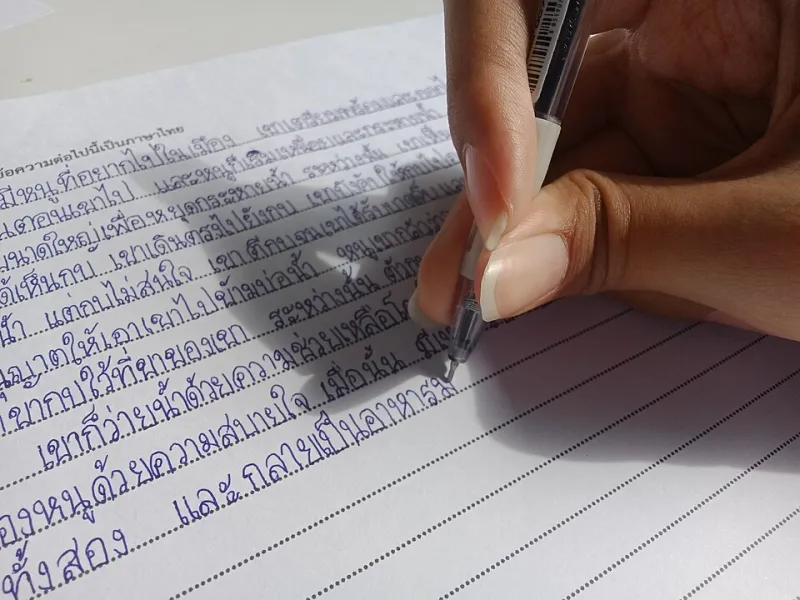
Photo: Jiafei Slay Queen, CC0, via Wikimedia Commons
Most productivity advice will tell you to journal in the morning. Grab your coffee, crack open that notebook before the chaos starts, write three pages and set your intentions. And look — that works for a lot of people. But there's a whole other world of writing that happens after midnight, in the glow of a single lamp, when the house is still and your brain has quietly shifted into a gear it doesn't use during daylight hours.
If you've ever found yourself scribbling in a notebook at 1 a.m. and thinking where did that come from, you're not imagining it. There's real science behind why the night unlocks something different.
Your Brain on Late Hours
Here's what's actually happening up there when the clock tips past midnight. During the day, your prefrontal cortex — the part of your brain responsible for planning, judgment, and social filtering — is running at full throttle. It's useful. It keeps you from saying weird things in meetings. But it also edits you before you even know what you're trying to say.
As you move into the later hours and your body begins winding down, that executive function relaxes. Your circadian rhythm is nudging you toward sleep, and as part of that process, the brain becomes less rigidly organized. Cognitive inhibitions loosen. The internal critic quiets. What researchers sometimes call "defocused thinking" kicks in — and that's exactly the mental state where unexpected connections happen, where ideas you didn't know you were holding finally surface.
Neurologically, this is similar to the hypnagogic state right before sleep, which has been credited with some of history's most famous creative breakthroughs. Edison famously napped in a chair holding steel balls over a metal plate so he'd wake the second he drifted off — trying to catch that edge between waking and sleep. Late-night journaling plants you in similar territory without requiring you to rig up a contraption.
The Solitude Factor
Beyond brain chemistry, there's something equally powerful happening socially. Nighttime is one of the few remaining contexts in modern American life where you're genuinely alone. Not just physically alone — but freed from the ambient pressure of being perceived.
During the day, even when no one's watching, most of us are performing. We're composing texts, presenting in Slack threads, maintaining a version of ourselves that's legible to others. That performance doesn't disappear the second you open a journal — it lingers. But at 2 a.m., with no notifications coming in and no obligations waiting in the next hour, the audience in your head finally leaves the room.
What you write without an audience is different. It's rawer, stranger, more honest. It wanders into territory you'd probably skip past during a focused morning session. That's not a flaw — that's the whole point.
The Creators Who Claimed the Night
This isn't a new phenomenon. Kafka wrote almost exclusively at night, often starting after 11 p.m. and working until three or four in the morning. He described it as the only time he felt like himself on the page — the daytime belonged to his job, his family, his obligations. The night was his.
Sylvia Plath kept journals that crackle with late-night energy, full of the kind of raw self-examination that's hard to access when you're managing a full day. Frida Kahlo painted through the night regularly. Charles Darwin wrote some of his most exploratory notebook entries in the quiet hours after his household was asleep.
These weren't people burning themselves out for the aesthetic of it. They were protecting a specific creative state that only became available when the world stopped interrupting.
What Night Journaling Actually Looks Like
If you're curious about trying this, it doesn't have to mean blowing up your sleep schedule. A few things worth knowing before you start:
You don't need a lot of time. Even twenty minutes of late-night writing, done a few times a week, can shift what you're able to access on the page. You're not committing to a four-hour writing session — you're just staying up slightly past your usual stopping point with a notebook in hand.
Let it be ugly. Night journaling is not the place for polished prose. This is the space for half-formed thoughts, weird tangents, questions you can't answer yet. Give yourself full permission to write badly and see what shows up underneath.
Try writing by hand. Screens carry a lot of daytime associations — work, social media, the news. A physical notebook and pen feel different at night. The tactile experience helps your brain settle into a different mode.
Wind down first. If you go straight from scrolling your phone to journaling, you'll mostly be processing whatever the algorithm fed you last. Give yourself ten or fifteen minutes of quiet before you pick up the pen — dim the lights, make tea, just sit. Let the day finish draining out before you start writing.
Watch your sleep. This is the real caveat. Chronic sleep deprivation will wreck your creativity far more thoroughly than it enhances it. If late-night journaling starts eating into the hours you genuinely need, it's not worth it. Think of it as a practice for specific nights — not a daily requirement.
What You Might Find There
The journal entries most people describe as their most honest, their most surprising, their most useful — they often happen at night. Not because the darkness is romantic, but because the conditions are finally right. The noise is gone. The performance is over. There's no one to be for the next several hours.
And in that space, something true tends to come forward.
If you've been journaling for a while and feel like you keep circling the same surface material, it might not be your prompts or your practice that needs changing. It might just be the hour. Try staying up a little later than usual, opening the notebook, and seeing what your brain says when it thinks no one's listening.
You might be surprised how much it's been waiting to tell you.