Your To-Do List Is Lying to You — and That's Exactly Why You Should Read It Back
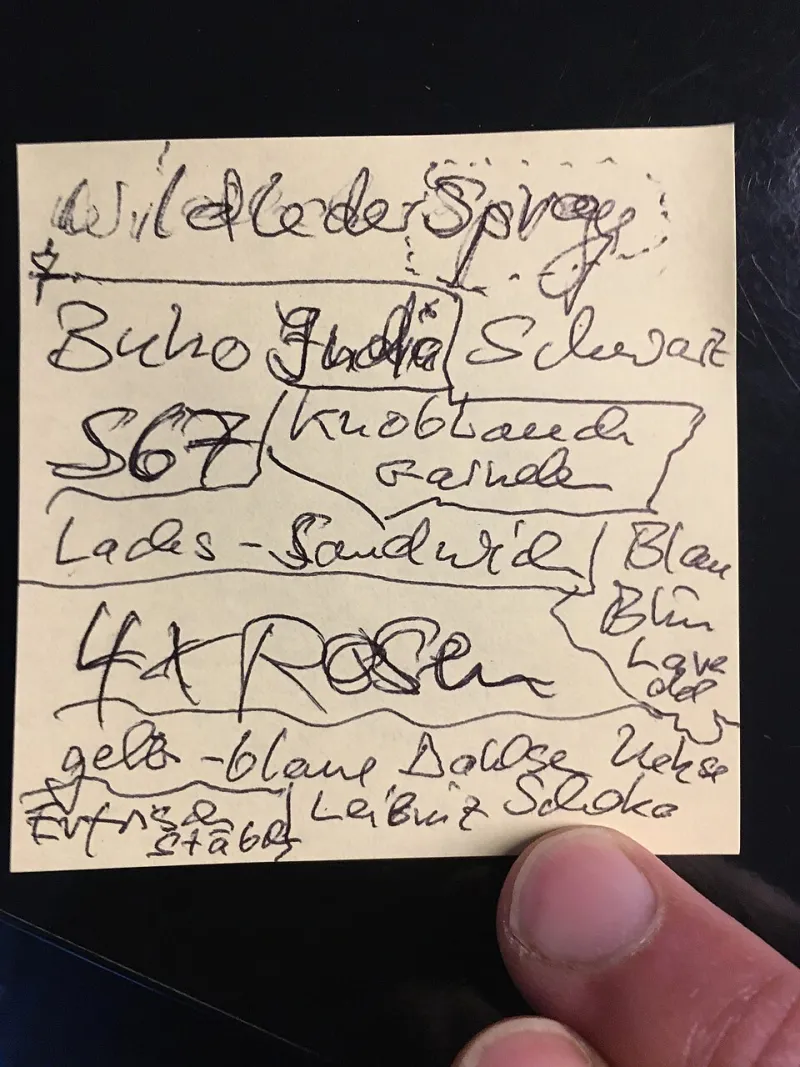
Photo: Pittigrilli, CC BY-SA 4.0, via Wikimedia Commons
Let's be honest about what a to-do list is. We frame it as a productivity instrument, a system, a life hack. But a to-do list is really a confession — written under pressure, in your own handwriting, about what you think you should be doing with your life.
And unlike your journal, it can't perform for an audience. Nobody keeps a to-do list to look impressive. It's scrawled on the back of a receipt, in a Notes app, on a legal pad at 7 a.m. That's precisely why it's more honest than anything you've written on purpose.
The Rollover Is the Real Entry
Here's the pattern most of us know by heart: you write "call the dentist" on Monday. You don't call the dentist. So on Tuesday, you write "call the dentist" again. By week three, you've rewritten the same six words so many times you've stopped seeing them.
But that rolled-over task is the entry. Not the tasks you checked off — those are just logistics. The tasks you keep carrying forward are the ones with weight attached: fear, ambivalence, a decision you're avoiding, a version of yourself you're not ready to schedule.
"Call Grandma" rolling over for a month isn't a scheduling failure. "Start the application" migrating across four weeks of lists isn't poor time management. These are feelings wearing the costume of errands.
The Three-Month Audit
If you want to know what your to-do lists have been trying to tell you, try this. It takes about forty minutes and requires zero discipline.
Step 1: Gather the evidence. Pull up three months of old lists — the Notes app, the planner, the pile of sticky notes in your desk drawer. If you're a Bullet Journal person, this is your monthly log. If you're a napkin person, good luck, but the napkins count.
Step 2: Mark the ghosts. Go through and circle every task that appears on more than two lists. Don't judge them yet. Just find them.
Step 3: Sort the ghosts into three piles.
- The Shoulds — tasks that were never really yours. Other people's priorities, borrowed ambitions, the gym membership of your to-do list.
- The Scared — tasks that matter to you but carry risk. The hard conversation, the application, the creative project with no guarantee.
- The Done-By-Now — tasks that time has already solved. The meeting that got canceled, the thing that no longer matters.
Step 4: Read the pattern out loud. Here's where it gets uncomfortable. Look at your three piles and finish this sentence: "For the last three months, I have been avoiding ___ because ___."
Most people find one of two things. Either their lists are dominated by Shoulds that need to be deleted without ceremony, or they're dominated by Scared items — the meaningful stuff that keeps getting outranked by the easy stuff.
What This Has to Do With Burnout
The connection to burnout is simple and grim: exhaustion rarely comes from doing too much. It comes from doing too much of the wrong things while the right things silently compound. Every rolled-over task is a small open loop, and open loops are expensive. Your brain keeps them running in the background like tabs you never closed.
The audit works because it forces the loops into daylight. Once you see that "research podcasts to start" has appeared on eleven consecutive lists, you can make an actual decision: do it, delete it, or consciously let it go. Any of the three closes the loop. The only option that doesn't work is the one you've been choosing — carrying it forward again, unexamined.
Keep the Confession Coming
After the audit, change one small habit: at the end of each week, before you write a new list, read the old one. Thirty seconds. Circle the ghosts. Ask the question.
Your to-do list will never be a diary in the traditional sense. But it might be the truest thing you write all week — a running account of what you're drawn to, what you're dodging, and who you're becoming one checkbox at a time.
The least you can do is read it back.