Three Pages Before Coffee: Why Morning Pages Won't Go Away
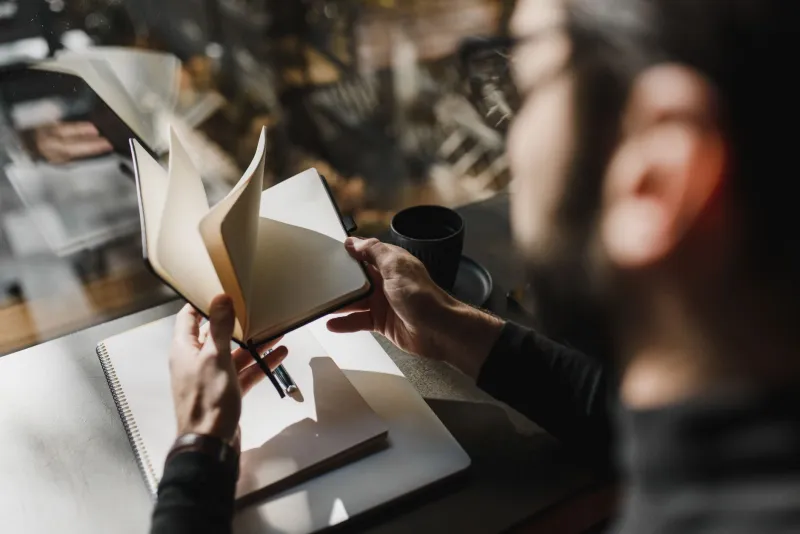
Scroll TikTok long enough and you'll find her: the creator filming nothing but their hand moving across a page at 6 a.m., coffee steaming nearby, birdsong in the audio. No voiceover. No advice. Just three pages of longhand, written before the world gets a vote.
Morning pages are back. Or maybe they never left.
A Ritual With a Birth Certificate
Unlike most wellness trends, morning pages can be traced to a single source: Julia Cameron's 1992 book The Artist's Way. The instructions are famously strict — three pages, first thing in the morning, longhand, stream of consciousness. No editing, no rereading, no agenda. Cameron called them a 'brain drain,' a way to sweep the mental clutter aside before the day begins.
For thirty years, the practice hummed along in artist communities and recovery circles. Then the algorithm found it. The #morningpages tag has racked up hundreds of millions of views, and a new generation — many of whom have never opened The Artist's Way — is adopting the ritual wholesale.
The Anti-Scroll
What's driving the revival? A lot of it seems to be what morning pages are not.
'Every other part of my morning starts with a screen,' one TikTok commenter wrote. 'This is the only thing I do that asks nothing of me.'
There's real contrast at work. Scrolling delivers dopamine in bursts — novelty, novelty, novelty — and leaves you with a head full of other people's thoughts. Morning pages do the opposite: they extract your thoughts and leave behind, at best, a little clarity. It's the difference between eating and digesting.
Habit researchers would also point to the ritual's simplicity. Three pages is a defined, finite task. There's a beginning, a middle, and a physical stopping point — the pen caps off and you're done. Compare that to 'checking my phone,' an activity with no natural end and no bottom.
Does It Actually Work?
Here's where it gets honest. The research on expressive writing — most famously James Pennebaker's work — supports the idea that writing about your thoughts and feelings, even messily, can reduce stress and improve mood over time. But the evidence is strongest for writing over multiple days about meaningful experiences, not necessarily for the specific three-pages-at-dawn format.
Cameron herself would probably shrug at that. She's long insisted morning pages aren't about the writing at all — they're about the clearing. You're not producing anything. You're emptying something.
That said, not everyone's convinced it's more than a trend with good lighting. Critics note that morning pages have quietly been absorbed into the same productivity culture they were meant to escape — now they show up in '5 a.m. routines' alongside cold plunges and optimization apps. A practice designed to be pointless is being graded on its outcomes.
How to Try It Without Turning It Into a Chore
If you're curious, the barrier to entry is a notebook and ten minutes:
- Do it before you look at your phone. Even fifteen minutes of delay changes the texture of what comes out.
- Lower the bar to the floor. 'I don't know what to write' written repeatedly is a legitimate morning page. Cameron says so.
- Don't reread. At least not right away. The point is expression, not analysis.
- Skip the fancy notebook. People who use their 'nice' journal for morning pages tend to quit. Use the ugly one.
Will morning pages still be having a moment in five years? Maybe not on TikTok. But the ritual has already outlived every platform that rediscovered it, and there's a reason: some mornings, the only way to hear yourself think is to make yourself write it down.