Maybe You're Not Lazy — Maybe You're Incubating: The Hidden Logic Behind Creative Delay
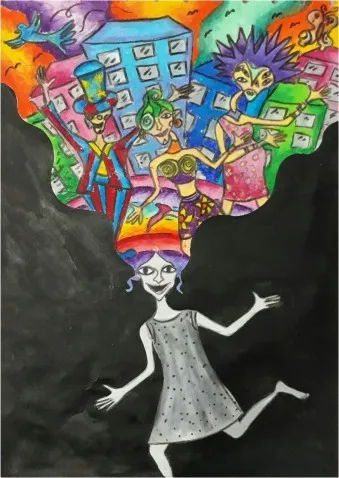
Photo: Sri Wulan Handayani, CC0, via Wikimedia Commons
The Guilt Trip Nobody Asked For
You know the feeling. The project has been sitting there for two weeks. You've opened the document, stared at it, closed it, reorganized your bookshelf, made three cups of coffee, and somehow convinced yourself that cleaning out your email inbox was urgent. And then — right around hour forty-seven of the deadline countdown — something clicks. Words pour out. The painting comes together. The song writes itself in one sitting.
And your first instinct is to feel terrible about the two weeks you "wasted."
Here's a gentler read on that story: you didn't waste anything. You were incubating.
Creative delay is one of the most misunderstood parts of the artistic process, and a lot of us have spent years treating it like a character flaw instead of a workflow. So let's unpack what's actually going on — in your brain, in your creative rhythm, and in the journal you keep telling yourself you'll start.
What Neuroscience Says About the Wandering Mind
When you're not actively working on something, your brain doesn't go offline. It shifts into what researchers call the default mode network — a state of loosely connected, associative thinking that's actually essential for creative breakthroughs. Graham Wallas, a psychologist who studied creativity back in the early 1900s, identified four stages of creative thought: preparation, incubation, illumination, and verification. That middle stage — incubation — is the one we culturally tend to skip right past.
Incubation is the part where you stop consciously forcing the problem and let your subconscious do its thing. It's why your best shower thoughts are genuinely useful. It's why you wake up at 3 a.m. with the answer to something you stopped thinking about days ago.
The trouble is, from the outside — and honestly from the inside too — incubation looks a lot like procrastination. You're not at your desk. You're not producing. But your brain is absolutely still on the clock.
The Difference Between Productive Delay and Pure Avoidance
Okay, but let's be real with each other for a second. Not all delay is incubation. Sometimes you're genuinely avoiding something because it scares you, because you don't feel ready, or because the project has some emotional weight you haven't dealt with yet. That's different — and it's worth knowing which one you're in.
Here's a rough way to tell them apart:
Productive delay tends to feel restless but not anxious. You're doing other things, but the project keeps drifting back into your thoughts. You notice things in daily life that feel connected to what you're working on. There's a low hum of creative energy even when you're not sitting down to work.
Avoidance tends to feel more like relief when you don't think about it — and dread when you do. The project feels heavier the longer you stay away. You might be numbing out with scrolling or TV in a way that feels less like rest and more like escape.
Neither one makes you a bad artist. But knowing which mode you're in changes how you respond to it.
Three Journaling Exercises to Find Your Rhythm
This is where your journal becomes less of a productivity tracker and more of a creative intelligence tool. Try these:
1. The Pre-Work Dump Before you sit down to create, spend five minutes writing about everything that isn't the project. What you're thinking about, what's bothering you, what you noticed on your walk, what you dreamed. The goal isn't relevance — it's clearing the mental cache. A lot of what feels like procrastination is actually your brain trying to process the background noise before it can focus. Give it five minutes of space first.
2. The Delay Autopsy After a creative session — especially one where you waited until the last minute — write a quick reflection. When did the ideas actually start forming? What were you doing in the days before? What finally broke the dam? Over time, you'll start to see patterns in your own incubation timeline. Some people need two days. Some need two weeks. Knowing your window is genuinely useful.
3. The Dread vs. Hum Check-In Once a week, write one sentence: "When I think about [project], I feel _____." Just one honest sentence. Track it over time. If the feeling shifts from restless-but-curious to heavy-and-avoidant, that's a signal worth paying attention to.
Famous Creatives Who Worked This Way
You're in good company, by the way. Douglas Adams, author of The Hitchhiker's Guide to the Galaxy, famously said, "I love deadlines. I love the whooshing noise they make as they go by." He was notoriously slow to deliver manuscripts — and also one of the most original voices in modern fiction.
Leonardo da Vinci spent years not finishing things. His notebooks are full of ideas he circled back to over decades. The Mona Lisa reportedly took four years. Historians now suggest that his delays were partly how he processed and refined — returning to work with fresh eyes after long gaps.
None of this is permission to blow off your responsibilities. But it is a reminder that creative timelines don't always look like corporate project management, and that's not a bug.
Working With Your Process, Not Against It
The real shift here is moving from fighting your natural rhythm to mapping it. Once you know that you tend to need a week of apparent inactivity before a creative breakthrough, you can actually plan for it — start projects earlier, build in buffer time, stop treating the "fallow" period like a failure.
Your journal is one of the best tools you have for this kind of self-study. Not because it'll fix your procrastination, but because it'll help you understand it — and there's a world of difference between being at the mercy of your creative process and being in conversation with it.
So next time you find yourself reorganizing your desk instead of writing, maybe pause before the guilt spiral. Ask yourself: is this avoidance, or is something brewing? Your honest answer matters more than any productivity hack ever could.