Your Handwriting Knows Things You've Forgotten: Reading the Story Buried in Old Journals
Photo: Michael Gaylard from Horsham, UK, CC BY 4.0, via Wikimedia Commons
There's a particular kind of vertigo that comes from cracking open a journal you wrote five, ten, maybe fifteen years ago. The words are yours. The memories are real. But the handwriting? It belongs to someone who feels almost like a stranger.
That feeling is worth sitting with for a while.
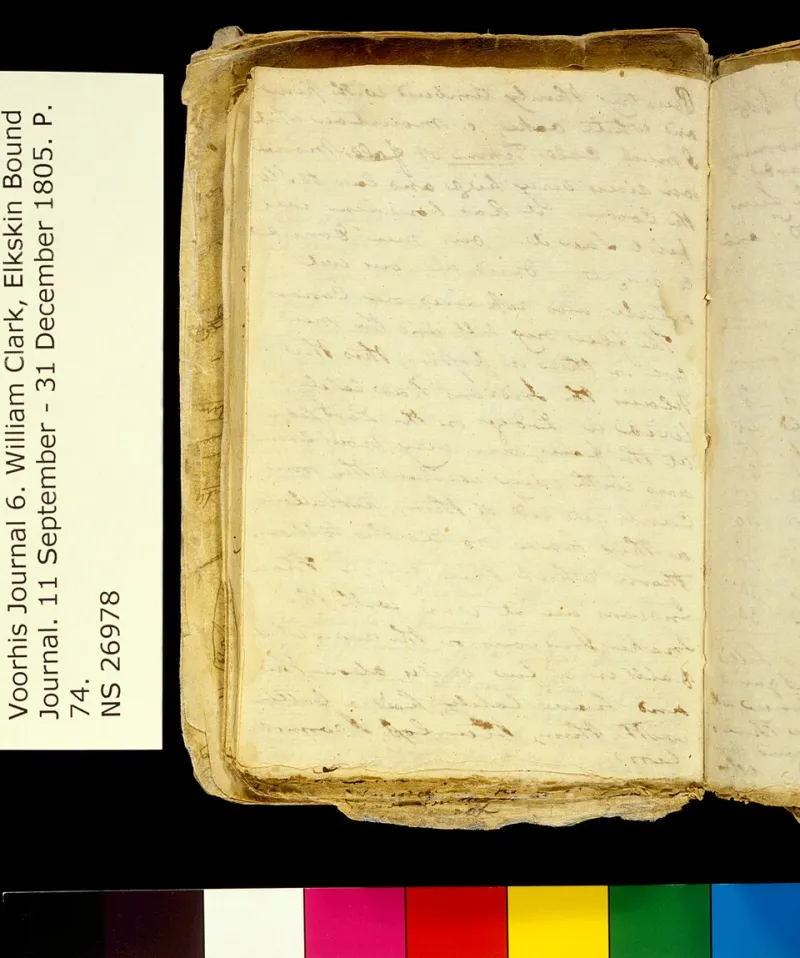
Most of us treat our old journals like storage units — full of stuff we shoved away and never went back to sort through. But if you slow down and actually look at the physical act of writing preserved on those pages, something remarkable starts to emerge. Your handwriting isn't just a delivery system for words. It's a visual autobiography, quietly logging your emotional state, your confidence, your anxiety, your ambition — one loop and slant at a time.
The Body Remembers What the Mind Edits Out
Handwriting is a deeply physical act. You're not just thinking letters onto a page — you're pressing, curving, lifting, rushing. The pressure of your pen, the size of your margins, the way your lines drift upward or sag toward the bottom of the page — all of it is shaped by your nervous system in real time.
Graphologists have long argued that handwriting reflects psychological states, but you don't need a specialist to notice the obvious stuff. Compare a journal entry written during a period of genuine calm to one written in the middle of a crisis. The difference is usually right there. Tight, cramped letters versus open, rolling ones. Neat margins versus words bleeding off the edge. A controlled hand versus one that looks like it was trying to outrun something.
When you revisit those pages now, you're not just reading what you thought — you're watching how you felt without the filter of memory softening everything.
What Your Teenage Handwriting Is Actually Telling You
If you kept a journal as a teenager or in your early twenties, go find it. Seriously. Put this down and find it.
Notice how large the letters are. How dramatically everything loops. How much space each word takes up, like it needed room to breathe or demand attention. There's an expressiveness there that often gets smaller — literally — as people move into adulthood. The handwriting of young people tends to perform a little. It's trying things out. The letters experiment with being bold, being beautiful, being seen.
Fast forward a decade and most people's handwriting gets more efficient. More compressed. It starts to look like it has somewhere to be. That's not a bad thing, but it is a thing worth noticing. At some point, many of us stopped writing like we were announcing ourselves to the world and started writing like we were just taking notes on it.
That shift says something. What it says is different for everyone.
The Voice Underneath the Voice
Beyond the physical strokes, there's another layer of evolution embedded in those old pages: your written voice. The way you constructed sentences. The vocabulary you reached for. The things you deemed worth writing down at all.
Early journal entries often circle obsessively around a small set of concerns — a relationship, a friendship, a fear of being misunderstood. There's an intensity to them that can feel almost embarrassing to read now. But that intensity was real. It was the full weight of your world at the time.
Later entries often get broader. The concerns expand, or they quiet down, or they shift from the personal to something more outward-facing. You start writing about ideas, not just feelings. Or you start writing about other people with more generosity than you had before. Or you notice that you stopped writing about a particular person entirely — which can tell you just as much as anything you actually put into words.
The evolution of what you choose to document is its own kind of self-portrait.
Noticing Without Judging
Here's the part that trips people up: it's easy to read old journals and cringe. The melodrama. The certainty about things that turned out to be wrong. The way you talked about yourself — sometimes too harshly, sometimes with a grandiosity that makes you wince.
But try to resist the impulse to judge that person. They were doing the best they could with what they had, which is exactly what you're doing right now. The journal didn't fail — it worked. It held those feelings so you didn't have to carry them forever.
Instead of judging, try getting curious. Ask yourself: What did I need back then that I was trying to get through writing? Sometimes it was clarity. Sometimes it was validation. Sometimes it was just the relief of saying something out loud, even if only to a page.
And then ask: What do I need now that's different? Because the gap between those two answers is basically a map of your growth.
Your Journal as a Living Archive
There's something worth preserving in the physical journals you keep, beyond whatever words are inside them. The actual objects — the worn covers, the coffee stains, the pages that got wrinkled because you wrote in the bath or on a flight through turbulence — are artifacts. They're evidence that you were here, that you were working through something, that you took the time to pay attention to your own life.
In a culture that increasingly values the immediate and the digital, there's something quietly radical about a stack of handwritten notebooks sitting on a shelf. They don't update. They don't optimize. They just hold what was true on a particular afternoon in a particular year, in the exact handwriting you had at the time.
That handwriting will keep changing. Your concerns will keep shifting. The version of you writing in a journal ten years from now will look back at today's entries with the same mix of recognition and mild surprise you feel looking back now.
Which means the best thing you can do is keep going. Keep writing. Let your hand move across the page without worrying too much about whether the letters are neat or the thoughts are polished.
Someday, the imperfect loops and honest mess of today's handwriting will be someone's most treasured artifact — and that someone is you.