Public Pages: How to Journal in a Crowded Room Without Shrinking Your Honesty
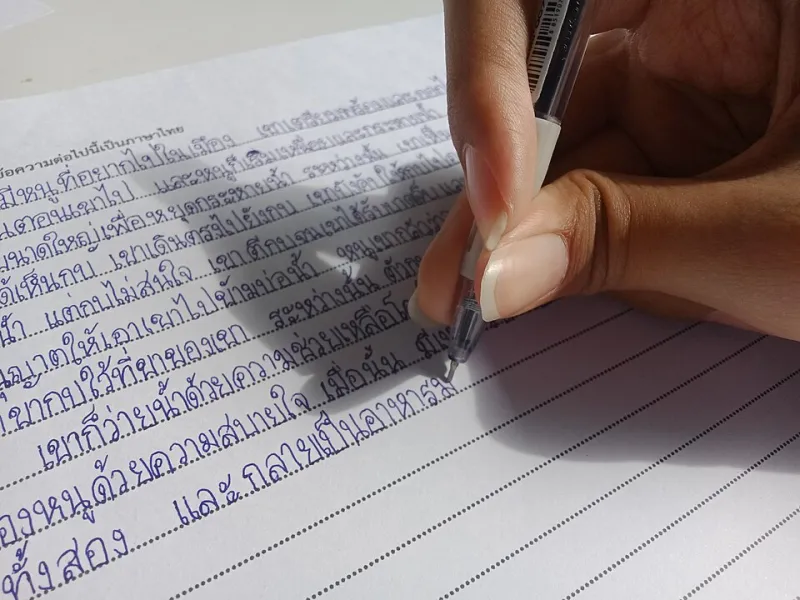
Photo: Jiafei Slay Queen, CC0, via Wikimedia Commons
There's a specific hour in a coffee shop — mid-morning, after the commuter rush but before the laptop crowd claims every outlet — when the room goes quiet enough to hear the espresso machine sigh. That's the hour I started writing in public. Not out of bravery. Mostly because my apartment at 7 p.m. contains a couch, a television, and roughly forty-seven ways to avoid a blank page. A café table contains a napkin, a pen, and nothing else to do but start.
If you've ever wanted to write outside your own living room but felt weird about it, this is for you. What follows is part atmosphere, part logistics, and part honest accounting of the strange moments.
Why a Room Full of Strangers Makes You More Honest
There's a small psychological trick at work here. At home, you're the only witness, which means nothing is at stake — and nothing at stake is the fastest route to a page full of grocery lists. In public, you're surrounded by people who will never read a word you write. That combination, total exposure and total anonymity, tends to tighten your sentences. You stop hedging. You write what you actually mean because there's no one to perform for and no one to impress.
I've also noticed that public entries run shorter and more direct. Less throat-clearing. Fewer three-paragraph warmups about the weather. When your table is the size of a paperback and someone is waiting for the seat across from you, you get to the point.
The Ninety-Second Setup
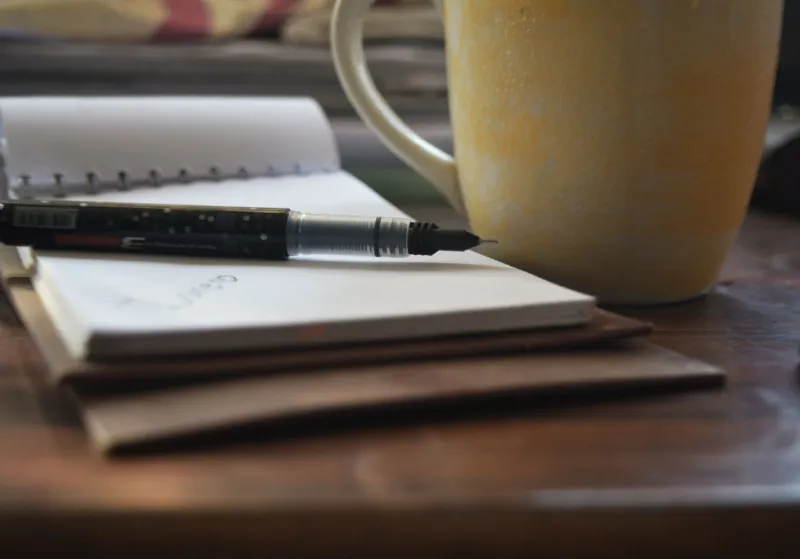
You do not need a ritual kit. You need a notebook that fits in a bag and a pen that doesn't skip. A few practical notes:
- Sit with your back to the room when you can. Corners, window ledges, the bar facing a wall. Not because anyone is watching — almost nobody is — but because you'll write differently when your shoulders are down.
- Order something and tip well. You're renting a table, not squatting at it. A drip coffee every ninety minutes is a fair trade.
- Skip the laptop. The whole point is the hand. The moment the screen comes out, you've become another person answering email, and the spell breaks.
- Bring a second pen. This sounds trivial until the first one dies mid-paragraph and you spend ten minutes composing an angry inner monologue instead of writing it down.
The Boundary Script
The question will come. A barista bussing the next table, a friendly stranger, a coworker who spots you from across the room: What are you writing? You owe them exactly nothing, and you can say so warmly.
"Notes for myself" works. So does "just journaling," delivered with a small smile and an immediate return to the page. What you don't want to do is improvise a cover story, because then you'll spend the rest of the hour half-performing it. The page is private, the room is public, and your job is to hold that line politely.
The Awkward Moments, Ranked
Mild: the barista clearing cups around you. Let them. Keep writing. They've seen a thousand people sit alone.
Medium: someone you know spots you. Wave, mention you're in the middle of something, and — this is the key part — mean it. "I'm going to finish this page, but it's good to see you" is a complete sentence and a complete boundary.
Rare but real: a neighbor reads over your shoulder. It happens less than you fear. If it does, close the notebook, look up, and hold the silence. It ends quickly.
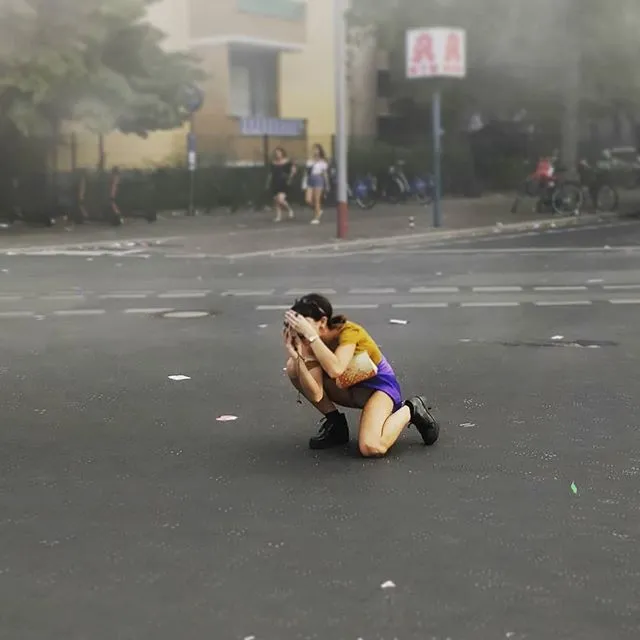
Genuinely hard: crying in a café. It happens, and it's survivable. Keep a napkin handy, don't apologize to the room, and remember that strangers are remarkably good at granting privacy to someone who is clearly having a moment.
Venue Notes
Café: best in the mid-morning lull or the 2 p.m. dead zone. Avoid the Sunday brunch crush, when a table is a hostage situation.
Park bench: unbeatable for handwriting, terrible for wind. A clip or a heavy phone on the opposite corner of the page solves most of it. Sit with the sun behind you.
Library: the most underrated option in America. No purchase required, no one will talk to you, and the silence has weight to it. Use a reading room, not the lobby.
Airport gate: the best place in the world to write about leaving. Delay announcements are free narrative tension. Everything you write there will sound like the beginning of something.
What Changes on the Page
Here's the part I didn't expect. Public journaling didn't make me more guarded — it made me more precise. Writing in a room full of strangers is a quiet reminder that your inner life is one of millions happening simultaneously, and that's oddly freeing. You stop treating the page like a monument and start treating it like a conversation.
So pack the notebook. Take the window seat. Order the coffee. The room will leave you alone, and the page will not.